


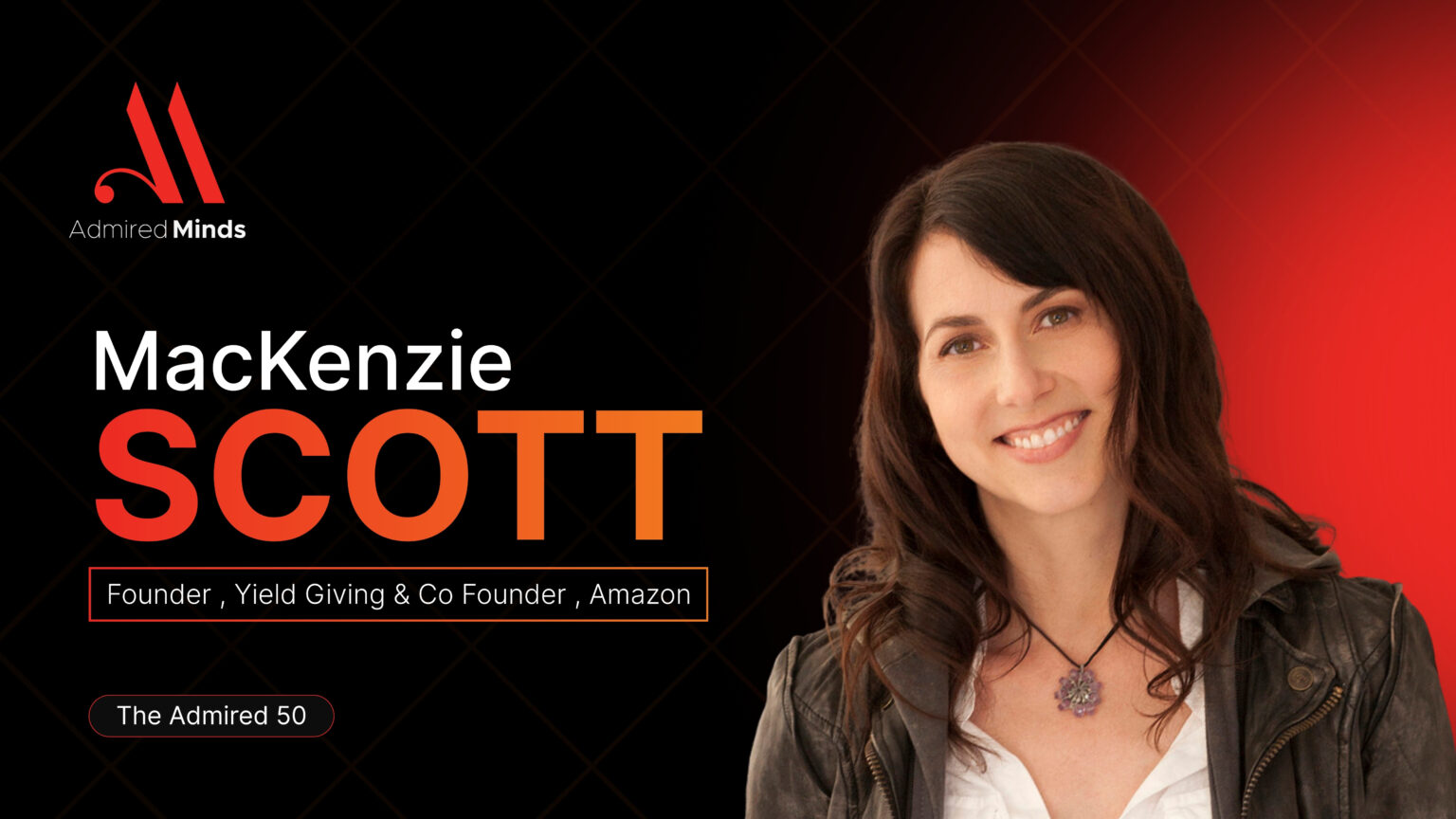
The Philanthropist Who Proved Trust Beats Control in Strategic Giving
When MacKenzie Scott announces new grants, nonprofit leaders around the world react differently — not because of the billion-dollar scale, but because she has fundamentally rewritten the rules of strategic giving. Her approach proves that trust, not control, creates the highest long-term impact.
“Trust is the highest form of human motivation.”
Since 2019, Scott has distributed over $19.25 billion to more than 2,450 organizations. Yet her true disruption goes far beyond dollars. She dismantled the power hierarchy traditionally embedded in philanthropy, replacing it with a strategic philosophy that liberates organizations rather than managing them.

Strategic Signature: The Trust-Based Revolution
Scott’s defining strategy is simple yet radical: she yields power. Her foundation “Yield Giving” reflects the belief that real value comes from giving up control — the opposite of conventional philanthropic management.
“People closest to the problem are the ones closest to the solution.”
Her grants include no proposals, no progress reports, and no spending timelines. This structure frees nonprofits from burdens that historically drained time, talent, and creativity. In 2024 alone, Scott distributed $2 billion across 199 organizations, focusing heavily on economic mobility and opportunity.
The No-Strings Innovation
Scott inverted one of the most unchallenged norms in philanthropy: donor-imposed restrictions. Instead, she champions three strategic shifts:
Unrestricted capital as competitive advantage. Organizations deploy funds where pressure is highest — scaling operations, stabilizing staff, or innovating programs.
Quiet research methodology. A discreet vetting system replaces grant proposals, eliminating bureaucracy while ensuring effectiveness.
Scale without strings. Median gift size: ~$5 million, delivered with complete operational autonomy.

Leadership Philosophy: Strategic Trust Over Micromanagement
Scott’s worldview centers on redistributing power rather than projecting influence. Her framework prioritizes:
Proximity-based expertise. Organizations closest to affected communities understand intervention points better than distant boards.
Operational flexibility. Unrestricted funding fuels infrastructure, talent, and innovation.
Scale and speed. Large grants given quickly generate momentum unreached by slow, cautious models.
Business Impact: Transforming Organizational Capacity
Scott’s unrestricted gifts dramatically improved innovation ability, talent retention, strategic planning, and long-term stability within nonprofits. Sector-wide research shows these grants strengthened organizations at levels traditional philanthropy rarely achieves.
The ripple effect is powerful: her methods push other philanthropists to reconsider restrictive norms.
Strategic Innovation: The For-Profit Expansion
Scott’s latest evolution expands beyond nonprofits. She now funds for-profit companies working on housing, healthcare, and economic mobility — applying the same trust-based principles to market-driven social innovation.
This approach supports:
Mission-driven business models that generate both revenue and impact.
Patient capital deployment that prioritizes long-term outcomes.
Ecosystem development between nonprofit and for-profit actors solving multi-layered social problems.

Crisis Leadership: Acceleration Over Caution
Scott’s crisis responses demonstrate contrarian strategic brilliance. She donated $5.7 billion in 2020 — the year most philanthropists pulled back due to economic uncertainty. Her philosophy: accelerate funding when communities need it most.
In 2024, she donated $65 million to LISC to address housing affordability at a moment when most donors avoided real estate-related commitments.
Global Vision: Scaling Trust-Based Philanthropy
Scott’s example is shifting global philanthropic norms. Her approach influences billionaire donors, foundation policies, nonprofit planning, and academic frameworks on strategic giving.
“The greatest impact comes from trusting people to know what they need.”
Why Scott Redefined Strategic Leadership
Her trust-based model proves that yielding control increases impact. By removing friction, she empowers organizations to focus on mission rather than donor compliance — unlocking levels of innovation previously suppressed by restrictive systems.
The Scott Strategic Legacy
Scott’s transformation from traditional donor to trust-based global leader demonstrates that strategic power lies not in directing others, but in enabling them. Her large, unrestricted grants build resilience, stability, and innovation capacity that restrictive models cannot match.
